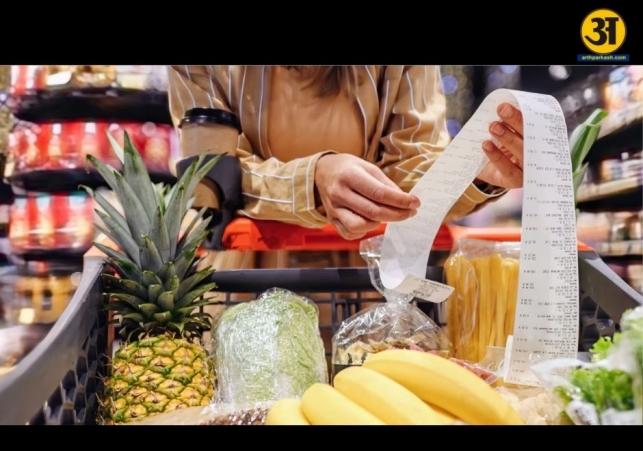
Why healthy food is still out of reach for many
The high cost of nutrition: Why the world’s poor can’t afford healthy food
- By Gurmehar --
- Friday, 01 Aug, 2025
Even though fewer people are going completely hungry today than last year, there’s a deeper problem we need to talk about: billions of people still can’t afford healthy food. While the world has seen a small drop in hunger, the price of eating well has quietly become a heavy burden.
According to the United Nations’ 2025 State of Food Security and Nutrition in the World report, about 8.2% of the global population—around 673 million people—faced hunger in 2024. That’s slightly lower than the 8.5% recorded in 2023. But while fewer people may be starving, a much bigger number—2.6 billion people—still can’t afford a healthy diet. That’s more than a quarter of the world’s population.
The cost of a nutritious meal went up to $4.46 per person per day in 2024, from $4.30 the previous year. That might not seem like a lot in rich countries, but in lower-income nations, this makes healthy food unreachable for many. In some places, that could be half—or more—of a person's daily wage.
The main reasons? Inflation, climate change, and disrupted supply chains. The global food system is still feeling the aftershocks of events like the COVID-19 pandemic and the Russia–Ukraine war. At the same time, droughts, floods, and heatwaves have made farming more difficult, reducing supply and increasing prices.
In India, the price of a healthy diet has jumped by 47% in just seven years, rising from $2.77 in 2017 to $4.07 in 2024. While the country has made good progress in lifting people out of hunger, the rising cost of healthy food is still a huge challenge—especially for rural families and the urban poor.
The FAO Food Price Index, which tracks global food prices, was at 128 points in June 2025, 6% higher than June 2024 and a full 28% higher than the 2014–2016 average. These price levels may no longer be making headlines, but for families living on tight budgets, they matter every day.
Poor families are pushed toward unhealthy food
The biggest issue isn’t just hunger—it’s that many people can only afford cheap, unhealthy food. Healthy diets require fruits, vegetables, pulses, and lean proteins, but these are often the most expensive items at the market. According to the FAO, vegetables cost nine times more per calorie than staples like rice and maize. Fruits and animal-source foods are six times more expensive. On the other hand, junk food and sweets are often far cheaper.
This pricing imbalance has created a dangerous reality: it’s often cheaper to eat poorly than to eat right. That’s why even people who have enough to fill their stomachs often end up with diets high in sugar, fat, and processed foods—and low in essential nutrients. These poor diets contribute to growing health problems like obesity, diabetes, and heart disease, even in countries still struggling with undernutrition.
This trend hits low-income families the hardest, especially in rural areas and among women. In 2024, 2.3 billion people—nearly 28% of the world’s population—experienced food insecurity, which means they didn’t have regular access to enough nutritious food. That’s not just about going hungry—it's about being forced to choose cheaper, less healthy options day after day.
India has seen some positive progress here. The number of people unable to afford a healthy diet fell from 804.9 million in 2017 to 586.5 million in 2024. That’s a major improvement—over 218 million people gained better access to nutrition. But even with that progress, India still mirrors the global pattern: nutritious food is simply becoming too expensive for too many families.
ALSO READ: Divya Deshmukh checkmates history to become India’s first Women’s World Cup champion
ALSO READ: Subtle signs of anxiety you might be missing in everyday life
This is an important wake-up call. If we only focus on reducing hunger without addressing the quality and affordability of food, we risk replacing one crisis with another. The global food system needs urgent reform—not just more food, but better food that people can actually afford.
As we look ahead to 2030, when the world hopes to end hunger under the UN’s Sustainable Development Goals, the reality looks grim. At current rates, more than 500 million people could still be undernourished by the end of the decade.
Conclusion: Time to shift the focus
It’s time we stop thinking of healthy food as a luxury. Good nutrition should be a right, not a privilege. Governments, global organisations, and local communities all need to work together to make sure food systems are more affordable, fair, and sustainable.
That means investing in local agriculture, fixing supply chains, and making healthier food options more accessible in every neighborhood. It also means stronger public policies—like subsidies for fresh produce instead of processed foods, and better school meal programs that focus on nutrition, not just calories.
Healthy eating isn’t just about individual choice—it’s about whether people can actually afford to make that choice. Until that changes, the dream of a well-fed, well-nourished world will stay out of reach for billions.
Related News